Training · After physio
Training after physio in Phuket
Pain gone is not the same as ready. Your physio and coach work on one plan, from rehab back to everything you want to do.
For anyone finishing physio, here or anywhere else, who wants to get back to full strength.
Opens WhatsApp with a message ready to send.
What the research says
The gap after rehab is real
Many people stop when the pain stops. The research shows strength and control often lag behind.
>10%
weaker thigh strength than the other leg, still, one year after ACL surgery, in pooled studies.1
1 in 6
people sprained the same ankle again within a year of a first sprain, in pooled studies.2
69%
of same-season repeat hamstring injuries in elite football came within two months of returning to full training.3
That gap between rehab and full training is where we work.
How we train
One plan, physio and coach
We call it the Bridge: Pain, Function, Performance. Your physio and coach work on one plan, with a test between each phase.
Your coach reads the report
Your coach reads your physio’s report before writing your program, so nothing from rehab gets lost.
Tested between phases
Your physio tests you between phases and clears each step up. The numbers decide, not the calendar.
Rehab work continues
The exercises that got you here stay in your program, made harder as you get stronger.
Back to everything
Then we build the strength, speed and fitness for your sport, work or training, and keep testing.
Your program
Pain, Function, Performance
Most people come to us partway through Function. Your physio tells your coach where you are.
- 01
Physio leads
Pain
Calm the problem, keep you moving and start building strength. Your physio leads; your coach can already train the rest of you.
Move on whenPain is settled, day-to-day movement is normal, and your physio signs off the first test.
- 02
Physio and coach
Function
Progressive strength work for the injured area and the whole body. Your physio reviews, your coach trains you.
Move on whenStrength and control meet your physio’s targets, compared with the other side where it applies.
- 03
Coach leads
Performance
Power, speed, fitness and sport or work skills, with physio check-ins along the way.
RetestStrength and function compared with your targets and your own last results.
Between sessions
Let your body set the pace
How the injured area feels the morning after training tells your coach whether to push on or hold.
The morning after, check three things: pain against your normal, any swelling or stiffness, and how daily movement feels.
Green: progress
No extra pain, swelling or stiffness the next morning. Progress as planned.
Amber: hold
A little more pain or stiffness that settles within 24 hours. Repeat the same load.
Red: step back
Pain up the next day, new swelling, or a joint that gives way. Step back and we book a physio check.
See your physio first if
- Pain is getting worse, not better
- New swelling, locking or giving way
- New numbness, tingling or weakness
- You have not been cleared after surgery
Our condition guides cover ACL rehab, ankle sprains, hamstring strains, low back pain and more.
Young and sporty?
Second injuries happen early
Client reviews
What our clients say
Rated 5.0 from 57 Google reviews
“I came to Optimize with chronic back pain and absolutely no ability to train. I was first matched with Khun Meaw, a highly skilled rehabilitation trainer who helped me eliminate my back pain completely. … After that, I continued training with Kate for a full year.”
nesterzhzhotGoogle review “I started seeing Khun Maew last August for a knee issue and within 15 minutes she had identified a multitude of issues I’d been dealing with for more than 20 years … I have been pain free for 6 months and am now in the gym working to rebuild my mobility and strength.”
Michelle LawlorGoogle review “Great Physiotherapy. Khun Meaw helped me very professionally with my the post-op rehab of my knee after ACL and Meniscus repair. She is very kind, knowledgeable and helpful. Really recommend her and Optimize!”
ELIH HectorGoogle review “Came to see K. Meaw after a thigh injury due to overuse by playing tennis, I wasn’t able to walk and she helped me recover in 3 sessions plus taught me about strengthening my muscles to do sports.”
GERARDO TAYGoogle review “I have been working with Khun Meaw on some strengthening exercises for my shoulders, hips and knees. … Her goal has been to give me the tools I need to work on my specific areas of need and not to keep me in an endless cycle of needing help……so professional and a joy to work with.”
Catlin McCrackenGoogle review “Optimise is a fantastic set up, I have been working with Khun Meaw on a physio front, and she is awesome and really gets to the root of the problem and starts from there – could not recommend highly enough. Having seen a couple of different physios on the island, Khun Meaw is certainly number 1.”
Jamie AllworkGoogle review
Questions
After physio questions
I feel fine now. Do I still need this?
Feeling fine and being fully strong are different. In pooled studies, thigh strength was still more than 10% below the other leg one year after ACL surgery.1 Testing shows where you are.
I did my physio somewhere else. Can I still start?
Yes. Bring any reports you have. Our physio can test you, and your coach builds from there.
Who decides when I move on?
Your physio, with tests between each phase. Your coach trains you and shares how sessions are going.
Do I keep doing my rehab exercises?
Yes, made harder over time. They become part of your training.
Is this only for athletes?
No. Work, family, travel and everyday life count too. We train you for what you want to get back to.
What happens at the free training consultation?
A coach goes through your goals, injury and physio history, sleep, stress and eating, and what has stopped you before. Then you agree where to begin. It’s free, with no obligation.
Physio and coaching team
Your physio and coach
Kate has a background in return to sport, and Karim in post-operative knee and ACL rehab. Meaw leads our clinical standards.
How integrated training works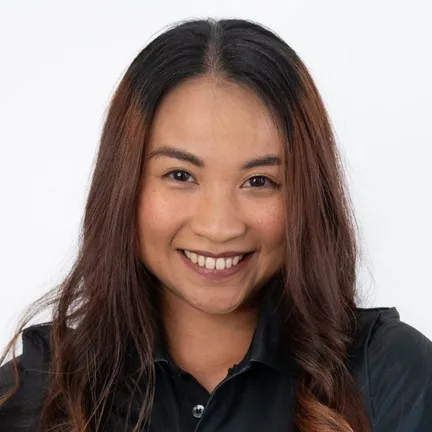
Meaw
Head Physiotherapist

Karim
Physiotherapist

Kate
Senior Coach

Joonas
Coach
Also on the team Sukanya, Physiotherapist Katie, Client Experience and Junior Coach Beer, Coach
Next step
Finish what physio started
Message us on WhatsApp to book your free training consultation. Bring your physio report if you have one.
Opens WhatsApp with a message ready to send.
In pain? Start with a free physio assessment
Questions first? WhatsApp +66 65 914 1604
Sources (4)
- Girdwood M, Culvenor AG, Rio EK, et al. Tale of quadriceps and hamstring muscle strength after ACL reconstruction: a systematic review with longitudinal and multivariate meta-analysis. Br J Sports Med. 2025;59(6):423-434.
- Michels F, Wastyn H, Pottel H, et al. The presence of persistent symptoms 12 months following a first lateral ankle sprain: a systematic review and meta-analysis. Foot Ankle Surg. 2022;28(7):817-826.
- Ekstrand J, et al. Hamstring injury rates have increased during recent seasons and now constitute 24% of all injuries in men’s professional football: the UEFA Elite Club Injury Study from 2001/02 to 2021/22. Br J Sports Med. 2023;57(5):292-298.
- Wiggins AJ, Grandhi RK, Schneider DK, et al. Risk of secondary injury in younger athletes after anterior cruciate ligament reconstruction: a systematic review and meta-analysis. Am J Sports Med. 2016;44(7):1861-1876.
This page is general information based on the research listed here. It is not medical advice. Your coach will tailor the plan to you, and your doctor’s advice comes first. Last updated November 2026.