Physiotherapy · ACL
ACL rehab in Phuket
Before or after ACL surgery, your physio builds the plan, tests you at every stage and then hands you to an S&C coach for the finish. Time and testing decide when you return, not the calendar alone.
For surgery coming up, recovery now, or a knee that never felt right after rehab.
Opens WhatsApp with a message ready to send.
What the research says
Time is not the finish line
Time alone does not tell you whether your strength, hopping and control are ready for sport. Testing does.
51%
lower knee re-injury rate per month of waiting, up to nine months after surgery, in one study. Waiting longer added no further drop.1
<25%
of people reached 90% thigh strength symmetry 6 to 12 months after surgery, in pooled data from 122 studies.2
65%
returned to their pre-injury level of sport after ACL surgery, and 55% to competitive sport, in a large review.3
We recommend no return to sport before nine months, and only after passing a full test battery.
How we work
Time, testing and strength
Guidelines agree on the core: start rehab on day one, rebuild the quadriceps (the muscle at the front of your thigh) with progressive strength work, and finish by meeting test criteria.4,5,6 Two guidelines also set a minimum of nine months.5,6
Straighten first, then strengthen
In the first weeks, getting the knee fully straight, settling the swelling and switching the thigh muscle back on come first. Everything after is built on them.4
Measure strength properly
We measure strength in both legs and in absolute terms. Comparing legs alone can hide weakness: in pooled studies, the gap looked bigger against uninjured people than against the other leg.7
Physio sign-off, coached finish
Your physio leads your rehab and signs off each stage. From the power and agility phase, an S&C coach leads your training, with physio reviews every four weeks.
Your recovery
Five phases, each with a test
Times are typical minimums. Your test results decide when you move on, and your surgeon’s restrictions come first.
- 01
Typically 0 to 6 weeks
Protect and activate
Rehab starts on day one with your physio: getting the knee fully straight, calming the swelling, switching your thigh muscle back on and walking normally again.4 No routine brace unless your surgeon asks.6,8
Move on whenThe knee straightens fully, like the other side. Swelling is down to a trace. You can lift the leg straight and walk without crutches.
- 02
Typically 6 to 12 weeks
Build the base
A strength phase. Heavy, progressive squats, split squats, step-ups and knee extensions, single-leg work and balance. After a hamstring graft, no added weight on knee extensions until 12 weeks.5
Start running whenAt least 12 weeks have passed, the knee straightens fully, thigh strength is over 80% of the other leg and single-leg hops on the spot are pain free.4
- 03
From about 3 months
Return to running
Run-walk intervals on flat ground, landing drills, two feet before one, while heavy strength work continues. Your physio leads this phase.
The handover gateThigh strength 80 to 90% and rising, 20 to 30 minutes of running with no reaction the next morning, and controlled single-leg hops. Your physio signs it off.
- 04
Typically 4 to 9 months
Power and agility
An S&C coach now leads, with physio reviews every four weeks. Jumps and hops, a staged sprint build-up, change of direction from planned to reactive, and sport drills. No contact or matches yet.
Ready for testing whenSport drills, full-effort sprints and reactive cutting cause no reaction, and thigh strength is still rising at every retest.
- 05
From 9 months
Return to sport
Your physio runs the full return to sport test. Then you return in stages: non-contact training, contact training, part matches, full competition. Strength and power training continues twice a week in season.
The return to sport testAt least nine months. Thigh strength over 90% of the other leg (100% for pivoting sport), four hop tests over 90%, knee questionnaires over 90, and a stable knee with full range.1,5
Passing lowers risk but does not remove it. A larger study linked passing return to sport tests with fewer second ACL injuries.9 A review of four studies found no clear link.10
Between sessions
Let your knee’s response set the pace
Your knee tells you how it coped with yesterday’s training. The answer decides whether you progress, hold or step back.
Each morning after a session, check three things: swelling, pain (0 to 10) and range (can it still straighten fully?).
Green: progress
No extra swelling, pain or stiffness the next morning, and your full range is still there. Progress the load as planned.
Amber: hold
A little more swelling or stiffness, or pain up by less than 2 points, settling within 24 hours. Repeat the same load.
Red: step back
Swelling still up after 24 hours, lost straightening, pain up 2 or more points the next day, or any giving way. Step back and tell your physio.
Get medical help today if
- Fever, spreading redness or fluid leaking from the wound
- Calf pain, swelling or heat: possible blood clot
- Chest pain or sudden breathlessness: call 1669 now
- The knee suddenly becomes hot, very swollen and painful
- New foot numbness or weakness, or a cold, pale foot
- The knee suddenly locks, or gives way with new swelling
See your surgeon within days if straightening is not improving by weeks 4 to 6, swelling keeps returning, or the knee feels loose.
Had surgery a while ago?
You may still improve
In pooled studies, thigh strength was still more than 10% below the other leg one year after surgery.7 Strength can still be built.
One 2026 Australian trial took 184 adults aged 18 to 40 with ongoing knee problems 9 months to 3 years after ACL surgery.11 Over half had done less than 8 months of rehab.12 Half did four months of twice-weekly, physio-supervised exercise and education; the rest had one physio session and a self-guided booklet.
At four months, the supervised group improved a little more on a knee pain and function score, and gained more thigh strength. By 12 months the gap had narrowed, as the other group kept improving.11 If your knee still is not right, we start by testing where it stands today.
73%
rated knee pain improved at four months with supervised exercise11
40%
at four months, after one education session and self-guided exercise
Patient reviews
What our patients say
Rated 5.0 from 57 Google reviews
“Great Physiotherapy. Khun Meaw helped me very professionally with my the post-op rehab of my knee after ACL and Meniscus repair. She is very kind, knowledgeable and helpful. Really recommend her and Optimize!”
ELIH HectorGoogle review “I honestly can’t thank Karim at Optimisefit enough … I’ve lived in five different countries and, unfortunately, had to deal with many injuries, so I’ve seen quite a few physios over the years. But no one has ever come close to the level of knowledge, care, and clarity that he brings.”
Unfiltered OpinionsGoogle review “I started seeing Khun Maew last August for a knee issue and within 15 minutes she had identified a multitude of issues I’d been dealing with for more than 20 years … I have been pain free for 6 months and am now in the gym working to rebuild my mobility and strength.”
Michelle LawlorGoogle review “Came to see K. Meaw after a thigh injury due to overuse by playing tennis, I wasn’t able to walk and she helped me recover in 3 sessions plus taught me about strengthening my muscles to do sports.”
GERARDO TAYGoogle review “Optimise is a fantastic set up, I have been working with Khun Meaw on a physio front, and she is awesome and really gets to the root of the problem and starts from there – could not recommend highly enough. Having seen a couple of different physios on the island, Khun Meaw is certainly number 1.”
Jamie AllworkGoogle review “I have been working with Khun Meaw on some strengthening exercises for my shoulders, hips and knees. … Her goal has been to give me the tools I need to work on my specific areas of need and not to keep me in an endless cycle of needing help……so professional and a joy to work with.”
Catlin McCrackenGoogle review “I had an impingement in my shoulder an Karim solved it within three sessions! Really amazing! I can only recommend going there.”
Julian BarthGoogle review
Questions
ACL rehab questions
Is nine months enough to return to sport?
Time is only half the rule. In one study, about 1 in 5 people who waited past nine months still re-injured their knee.1 Passing your tests matters too.
My knee feels fine. Does that mean it’s strong?
Feeling fine is not the same as being strong. In pooled studies, most people went back to sport with clearly weaker quadriceps, a gap that only shows up when tested.2
Should I train before my ACL surgery?
Do I need a brace after ACL surgery?
If I pass the tests, can I still re-injure my knee?
Yes. About 1 in 6 people have a second ACL injury in pooled studies.15 Testing guides your training; it cannot promise safety. That is why we keep training your leg after you return.
What happens at the free physio assessment?
Your physio takes your surgical history, checks your knee and the warning signs, and works out where you are against the next stage. You leave with a clear plan. It’s free, with no obligation.
Physio team
Your ACL team
Karim has a background in post-operative knee and ACL rehab. Meaw leads our clinical standards.
How physiotherapy works here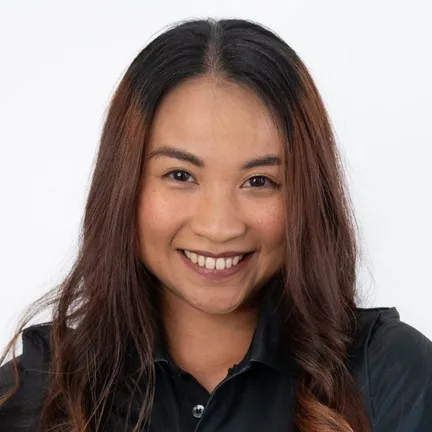
Meaw
Head Physiotherapist
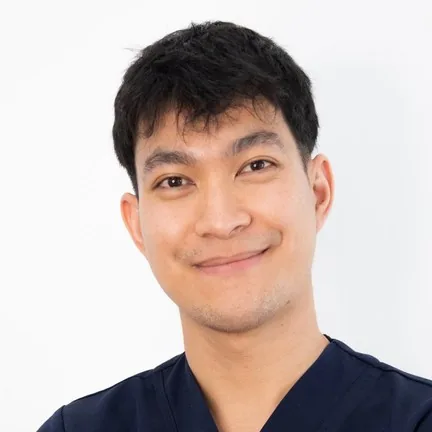
Karim
Physiotherapist
Also on the team Sukanya, Physiotherapist
Next step
Find out what your knee can do
Message us on WhatsApp to book your free physio assessment. Whether your surgery is coming up, recent or years ago, you leave with a clear plan.
Opens WhatsApp with a message ready to send.
Questions first? WhatsApp +66 65 914 1604
Sources (15)
- Grindem H, Snyder-Mackler L, Moksnes H, et al. Simple decision rules can reduce reinjury risk by 84% after ACL reconstruction: the Delaware-Oslo ACL cohort study. Br J Sports Med. 2016;50(13):804-808.
- Tsai LC, Jeanfreau CM, Hamblin KA, et al. Time, graft, sex, geographic location, and isokinetic speed influence the degree of quadriceps weakness after anterior cruciate ligament reconstruction: a systematic review and meta-analysis. Knee Surg Sports Traumatol Arthrosc. 2022;30(10):3367-3376.
- Ardern CL, Taylor NF, Feller JA, et al. Fifty-five per cent return to competitive sport following anterior cruciate ligament reconstruction surgery: an updated systematic review and meta-analysis. Br J Sports Med. 2014;48(21):1543-1552.
- Kotsifaki R, Korakakis V, King E, et al. Aspetar clinical practice guideline on rehabilitation after anterior cruciate ligament reconstruction. Br J Sports Med. 2023;57(9):500-514.
- van Melick N, van Cingel RE, Brooijmans F, et al. Evidence-based clinical practice update: practice guidelines for anterior cruciate ligament rehabilitation based on a systematic review and multidisciplinary consensus. Br J Sports Med. 2016;50(24):1506-1515.
- Häner M, Petersen W, Praetorius A, et al. ACL rehabilitation after reconstruction: evidence-based consensus recommendations from the German Knee Society, Part IV. J Exp Orthop. 2026;13(3):e70875.
- Girdwood M, Culvenor AG, Rio EK, et al. Tale of quadriceps and hamstring muscle strength after ACL reconstruction: a systematic review with longitudinal and multivariate meta-analysis. Br J Sports Med. 2025;59(6):423-434.
- Andrade R, Pereira R, van Cingel R, et al. How should clinicians rehabilitate patients after ACL reconstruction? A systematic review of clinical practice guidelines (CPGs) with a focus on quality appraisal (AGREE II). Br J Sports Med. 2020;54(9):512-519.
- Grindem H, Engebretsen L, Axe M, et al. Activity and functional readiness, not age, are the critical factors for second anterior cruciate ligament injury: the Delaware-Oslo ACL cohort study. Br J Sports Med. 2020;54(18):1099-1102.
- Losciale JM, Zdeb RM, Ledbetter L, et al. The association between passing return-to-sport criteria and second anterior cruciate ligament injury risk: a systematic review with meta-analysis. J Orthop Sports Phys Ther. 2019;49(2):43-54.
- Culvenor AG, Bruder AM, West TJ, et al. Exercise therapy and education for young adults with persistent knee problems after anterior cruciate ligament reconstruction: a randomized clinical trial. Ann Intern Med. 2026. doi:10.7326/ANNALS-26-02460.
- Culvenor AG, West TJ, Bruder AM, et al. Recruitment and baseline characteristics of young adults at risk of early-onset knee osteoarthritis after ACL reconstruction in the SUPER-Knee trial. BMJ Open Sport Exerc Med. 2024;10(2):e001909.
- Eitzen I, Holm I, Risberg MA. Preoperative quadriceps strength is a significant predictor of knee function two years after anterior cruciate ligament reconstruction. Br J Sports Med. 2009;43(5):371-376.
- Schoepp C, Tennler JS, Dudda M, et al. Running into deficits: post-operative bracing limits knee extension recovery 6 months after anterior cruciate ligament reconstruction. Knee Surg Sports Traumatol Arthrosc. 2026;34(4):1484-1493.
- Piussi R, Simonson R, Zsidai B, et al. Better safe than sorry? A systematic review with meta-analysis on time to return to sport after ACL reconstruction as a risk factor for second ACL injury. J Orthop Sports Phys Ther. 2024;54(3):161-175.
This page is general information based on the research listed here. It is not a diagnosis. Your physio will tailor the plan to you, and your surgeon’s or doctor’s instructions come first. Clinically reviewed by Meaw, Head Physiotherapist at Optimise, November 2026.