Physiotherapy · Meniscus tear
Meniscus tear physio in Phuket
A torn meniscus is not a broken knee. Our physios sort which kind of tear you have, build the knee with measured strength work, and send you to a surgeon early when the signs say so.
For worn tears from 35 plus, twisting injuries in sport, and rehab before or after surgery.
Opens WhatsApp with a message ready to send.
What the research says
Many painless knees show tears
The meniscus is a rubbery cushion between your thigh and shin bones. From middle age it wears, and tears show up on scans of knees that feel fine. A tear on a report is a finding, not a verdict.
61%
of adults aged 50 to 90 with a meniscus tear on MRI had no knee pain, aching or stiffness in the past month.1
80%
had a meaningful improvement at two years with supervised exercise, against 81% after keyhole surgery, in one trial of worn tears.2
10yrs
of follow up in one trial: exercise first and keyhole trimming gave similar pain and function.3
Your knee’s strength, swelling and function guide the plan. The scan alone does not.
How we work
Sort the tear, build the knee
Guidelines put exercise first for worn tears, and say some injury tears need a surgeon early.4,5 So we start by sorting which group you are in, then load the knee in planned steps and retest.
Strength is the main tool
In one trial, supervised exercise built more thigh strength than keyhole surgery at three months.2 Strong thigh and hip muscles help the knee cope with stairs, squats and sport.
Swelling sets the pace
Swelling the morning after exercise tells us the knee was overloaded. We adjust the load by it, session by session.
Test, then decide
We measure strength, swelling, range and function at the start, at six weeks and at twelve weeks. At twelve weeks you, your physio and if needed a surgeon decide the next step.
Your recovery
Four phases, about 12 to 16 weeks
Weeks are a guide. You move on when you pass each set of milestones, and your physio signs off every stage.
- 01
Typically 0 to 2 weeks
Settle the knee
A calm knee that straightens fully, bends comfortably and walks without a limp. Thigh squeezes, heel props, heel slides, the bike, bridges and calf raises from day one.
Move on whenThe knee straightens like the other side, you walk without a limp, a straight leg raise has no droop, and there is little or no morning swelling.
- 02
Typically 2 to 8 weeks
Build strength
The core of the program: thigh, hip and calf strength two to three times a week, with balance work. Box squats, split squats, step-ups, knee extensions and hamstring curls, with load rising while the knee stays calm.
Move on whenFull range without catching, no morning swelling for two weeks, a controlled single-leg sit to a box, and strength rising on the six-week retest.
- 03
Typically 8 to 12 weeks
Load and impact
Heavier strength, jumps and landings, run-walk intervals and planned changes of direction, delivered with a coach under physio oversight. Week twelve brings the full retest.
The 12-week retestThigh strength at least 80% of the other leg, hop distance close to the other side, no swelling after running or hopping, and a clearly better knee score.
- 04
From about 12 weeks
Back to sport
Your S&C coach takes over: heavier and faster strength, power, full-speed pivoting and reactive cutting, then partial and full matches.
Full play whenTwo weeks of full training with no swelling, strength and hop tests close to the other leg, and confidence cutting, landing and twisting.
After a trim, return to sport is typically 4 to 12 weeks. After a repair, your surgeon sets limits on weight and bending, and full sport takes 6 to 9 months.6,4
Between sessions
Check your knee every morning
Your answers the morning after each session decide whether you progress, hold or step back.
Check three things: new swelling around the kneecap, pain against your usual, and your range, plus any catching or giving way.
Green: progress
No new swelling, pain back to usual by morning, full range. Add a little more load, range or speed next session.
Amber: hold
Slight swelling or stiffness that settles by midday, or pain still a bit up next morning. Repeat the same session.
Red: step back
Clear new swelling, pain above 5, or lost straightening. Drop back a step and tell your physio within 48 hours.
Go to hospital now if
Call 1669 in Thailand.
- Your knee locks and will not straighten
- A hot, red, swollen knee or wound, with fever
- You cannot take weight after a twist or fall
- The knee balloons with swelling within hours of injury
- After surgery: calf pain, swelling or redness
- Sudden breathlessness or chest pain, especially after surgery
See a doctor within days if an injury caused catching or giving way, swelling keeps returning, or a surgery wound turns red or leaks. Some young tears need early repair.4
Told you need keyhole surgery?
Trimming was tested against a fake operation
In a Finnish trial of 146 people aged 35 to 65 with worn tears, keyhole trimming did no better than a sham operation at one year.7 At ten years the researchers reported no benefit from the operation.8
In younger adults, two trials up to ages 40 and 45, mostly after an injury, found starting with exercise gave similar results to early surgery at one to two years.9,10 Some tears are different: a locked knee, or a bucket handle, root or full radial tear in a younger person, should see a surgeon first.4,5
Patient reviews
What our patients say
Rated 5.0 from 57 Google reviews
“Great Physiotherapy. Khun Meaw helped me very professionally with my the post-op rehab of my knee after ACL and Meniscus repair. She is very kind, knowledgeable and helpful. Really recommend her and Optimize!”
ELIH HectorGoogle review “I started seeing Khun Maew last August for a knee issue and within 15 minutes she had identified a multitude of issues I’d been dealing with for more than 20 years … I have been pain free for 6 months and am now in the gym working to rebuild my mobility and strength.”
Michelle LawlorGoogle review “I honestly can’t thank Karim at Optimisefit enough … I’ve lived in five different countries and, unfortunately, had to deal with many injuries, so I’ve seen quite a few physios over the years. But no one has ever come close to the level of knowledge, care, and clarity that he brings.”
Unfiltered OpinionsGoogle review “I have been working with Khun Meaw on some strengthening exercises for my shoulders, hips and knees. … Her goal has been to give me the tools I need to work on my specific areas of need and not to keep me in an endless cycle of needing help……so professional and a joy to work with.”
Catlin McCrackenGoogle review “Optimise is a fantastic set up, I have been working with Khun Meaw on a physio front, and she is awesome and really gets to the root of the problem and starts from there – could not recommend highly enough. Having seen a couple of different physios on the island, Khun Meaw is certainly number 1.”
Jamie AllworkGoogle review “Came to see K. Meaw after a thigh injury due to overuse by playing tennis, I wasn’t able to walk and she helped me recover in 3 sessions plus taught me about strengthening my muscles to do sports.”
GERARDO TAYGoogle review “I had an impingement in my shoulder an Karim solved it within three sessions! Really amazing! I can only recommend going there.”
Julian BarthGoogle review
Questions
Meniscus tear questions
My scan shows a tear. Does it need fixing?
Does catching mean the torn bit must be trimmed?
Does exercise work as well as surgery for every tear?
Does trimming stop arthritis developing?
In one trial, ten years on, 23% of the trimmed group and 20% of the exercise group had arthritis on X-ray, a similar result.3
After a repair, will I be back in six weeks?
A repaired tear needs time to heal. A consensus advises 6 to 9 months before full sport after a repair, and 4 to 12 weeks after a trim.4
Do I need clinic sessions, or can I train at home?
In one large trial of people aged 45 to 85 with a worn tear and knee arthritis, adding clinic physio to a home program did not reduce pain more at three months.13 A good plan you follow is what counts.
Physio team
Your knee team
Karim has a background in post-operative knee rehab. Meaw leads our clinical standards.
How physiotherapy works here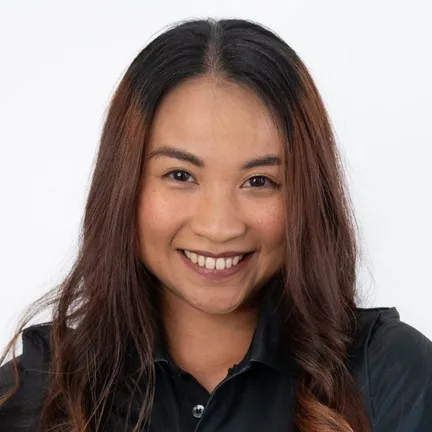
Meaw
Head Physiotherapist

Karim
Physiotherapist
Also on the team Sukanya, Physiotherapist
Next step
Find out what your knee can do
Message us on WhatsApp to book your free physio assessment. We sort your tear type, test your knee and give you a clear plan, including a surgeon’s opinion when you need one.
Opens WhatsApp with a message ready to send.
Questions first? WhatsApp +66 65 914 1604
Sources (13)
- Englund M, Guermazi A, Gale D, et al. Incidental meniscal findings on knee MRI in middle-aged and elderly persons. N Engl J Med. 2008;359(11):1108-1115.
- Kise NJ, Risberg MA, Stensrud S, et al. Exercise therapy versus arthroscopic partial meniscectomy for degenerative meniscal tear in middle aged patients: randomised controlled trial with two year follow-up. BMJ. 2016;354:i3740.
- Berg B, Roos EM, Englund M, et al. Arthroscopic partial meniscectomy versus exercise therapy for degenerative meniscal tears: 10-year follow-up of the OMEX randomised controlled trial. Br J Sports Med. 2025;59(2):91-98.
- Prill R, Ma CB, Wong SE, et al. The formal EU-US Meniscus Rehabilitation 2024 Consensus: an ESSKA-AOSSM-AASPT initiative. Part II: prevention, non-operative treatment and return to sport. Knee Surg Sports Traumatol Arthrosc. 2025;33(8):3014-3024.
- Siemieniuk RAC, Harris IA, Agoritsas T, et al. Arthroscopic surgery for degenerative knee arthritis and meniscal tears: a clinical practice guideline. BMJ. 2017;357:j1982.
- Pujol N, Giordano AO, Wong SE, et al. The formal EU-US Meniscus Rehabilitation 2024 Consensus: an ESSKA-AOSSM-AASPT initiative. Part I: rehabilitation management after meniscus surgery. Knee Surg Sports Traumatol Arthrosc. 2025;33(8):3002-3013.
- Sihvonen R, Paavola M, Malmivaara A, et al. Arthroscopic partial meniscectomy versus sham surgery for a degenerative meniscal tear. N Engl J Med. 2013;369(26):2515-2524.
- Kalske R, Sihvonen R, Paavola M, et al. Arthroscopic partial meniscectomy for degenerative tear: 10-year outcomes. N Engl J Med. 2026;394(17):1757-1759.
- Skou ST, Holmich P, Lind M, et al. Early surgery or exercise and education for meniscal tears in young adults. NEJM Evid. 2022;1(2):EVIDoa2100038.
- van der Graaff SJA, Eijgenraam SM, Meuffels DE, et al. Arthroscopic partial meniscectomy versus physical therapy for traumatic meniscal tears in a young study population: a randomised controlled trial. Br J Sports Med. 2022;56(15):870-876.
- Horga LM, Hirschmann AC, Henckel J, et al. Prevalence of abnormal findings in 230 knees of asymptomatic adults using 3.0 T MRI. Skeletal Radiol. 2020;49(7):1099-1107.
- Sihvonen R, Paavola M, Malmivaara A, et al. Arthroscopic partial meniscectomy for a degenerative meniscus tear: a 5 year follow-up of the placebo-surgery controlled FIDELITY trial. Br J Sports Med. 2020;54(22):1332-1339.
- Katz JN, Collins JE, Bisson L, et al. A randomized trial of physical therapy for meniscal tear and knee pain. N Engl J Med. 2025;393(17):1694-1703.
This page is general information based on the research listed here. It is not a diagnosis. Your physio will tailor the plan to you, and your surgeon’s or doctor’s instructions come first. Clinically reviewed by Meaw, Head Physiotherapist at Optimise, November 2026.