Physiotherapy · Shoulder pain
Shoulder pain physio in Phuket
For pain when you lift, reach or press overhead. Our physios measure what your shoulder can do, build it up step by step, then hand you to a coach for the return to lifting and sport.
For rotator cuff pain, impingement, tears found on a scan, or pain that has dragged on for months.
Opens WhatsApp with a message ready to send.
What the research says
Scan findings rarely explain the pain
It is easy to blame what a scan shows. But in adults aged 41 to 76, rotator cuff changes on MRI are close to universal, whether a shoulder hurts or not.1
96%
of shoulders with no symptoms had rotator cuff changes on MRI, in one 2026 study of adults aged 41 to 76.1
10yrs
In one trial, shaving bone (decompression surgery) was no better than placebo surgery or exercise therapy after ten years.2
8wks
In one trial, a steroid injection gave a small improvement in pain and function at 8 weeks. By 6 months, there was no difference.3
Cuff changes on a scan are expected from middle age. Strength and load tolerance are what we measure and build.
How we work
Measure it, load it, progress it
A 2026 Dutch guideline puts exercise at the centre of non-surgical care, though no single program has been proven best.4,5 We find what your shoulder tolerates today, then build it up step by step.
Strength is the core
Progressive strength work for the rotator cuff and shoulder blade is the core of the plan. In a 2026 review, programs with active or strength exercise improved shoulder strength.6
Measured, not guessed
We measure strength, range and your shoulder score at the start, at 6 weeks and at 12 weeks, so decisions rest on numbers.
Clinic time where it counts
In one trial of 708 people, one session of good advice with a home program did as well as up to six supervised physio sessions.3 So we use clinic time for testing and progressing.
Physio-led, coach-delivered
Your physio assesses you and signs off each stage. A coach then runs your training to your physio’s plan, and an S&C coach builds power for your sport.
Your recovery
Four phases, moved through by milestones
Timeframes are typical, not fixed. You move on when you meet the milestones, and your physio signs off each stage.
- 01
Typically 0 to 2 weeks
Settle and keep moving
Your physio explains what is going on, adjusts the loads that flare it, and finds holds and movements your shoulder tolerates today. The rest of you keeps training.
Move on whenNight pain is easing, daily tasks like dressing and reaching are manageable, and moderate-effort holds stay green the next morning.
- 02
Typically 2 to 6 weeks
Build strength
Rotator cuff and shoulder blade exercises three times a week, adding weight as you get stronger: side-lying rotation, arm raises, band rows and push-up plus.7
Move on whenThree sessions a week for 2 weeks, all green, loads going up, strength and shoulder score improving, and arm raises to at least 150 degrees.
- 03
Typically 6 to 12 weeks
Overhead strength and range
The arm goes higher and the load gets heavier: an overhead pressing ladder, pulling, end-range strength and your gym lifts back gradually. A coach runs this to your physio’s plan.
The week 12 reviewShoulder score up 13 points or more, strength at 80% of your other side, and 8 loaded presses with a green next morning.
- 04
Typically from 12 weeks
Power and return
Training, not treatment. An S&C coach builds speed, power and volume for your sport: medicine ball throws, fast band work, heavy press and pull, and sport ladders.
Full return whenStrength at 90% of your other side, two weeks of full training all green, and your sport ladder completed. These are clinic standards.
No meaningful progress by 12 weeks? Our clinic standard is a specialist opinion, plus a scan if it would change the plan.8,4
Between sessions
Let the traffic light decide
Mild pain during exercise is acceptable. Check during and after each session, and the next morning.
Check three things: pain during exercise (about 3 out of 10 is fine), how it feels the next morning, and your strength and reach.
Green: progress
Exercise pain about 3 out of 10 or less, not rising set to set, and no worse next morning. Progress as planned.
Amber: hold
Pain up to 5 out of 10, or slightly worse next morning but settled within 24 hours. Repeat the same dose, or adjust range or load.
Red: step back
Pain over 5 out of 10, clearly worse next day or at night, or new weakness. Drop back a step and tell your physio.
Get medical help today if
- You cannot lift your arm after a fall or injury
- The shoulder is deformed or stuck after a fall or injury
- The shoulder is stuck after a seizure or electric shock
- A hot, red, swollen shoulder, or a fever
- Chest pain, breathlessness or sweating: call 1669 now
- New weakness or numbness spreading down the arm
See a doctor within days for past cancer with new pain, unexplained weight loss, constant night pain, a new lump, or morning stiffness in both shoulders and hips.8
Thinking about surgery or another injection?
Give it 12 measured weeks first
In one UK trial of 313 people, shaving bone was no better than a placebo operation where no bone was removed, at 6 months.9 In one Finnish trial, it was still no better than placebo surgery or exercise therapy after ten years.2
In one Dutch trial of 200 people with new shoulder pain, an injection was better at 6 weeks, and exercise therapy was better at 6 to 12 months.10 Surgery still has a place: a tear after a real injury, or a confirmed full-thickness tear that has not improved after 3 to 6 months of exercise, deserves a specialist opinion.8,11
Patient reviews
What our patients say
Rated 5.0 from 57 Google reviews
“I had an impingement in my shoulder an Karim solved it within three sessions! Really amazing! I can only recommend going there.”
Julian BarthGoogle review “I have been working with Khun Meaw on some strengthening exercises for my shoulders, hips and knees. … Her goal has been to give me the tools I need to work on my specific areas of need and not to keep me in an endless cycle of needing help……so professional and a joy to work with.”
Catlin McCrackenGoogle review “I honestly can’t thank Karim at Optimisefit enough … I’ve lived in five different countries and, unfortunately, had to deal with many injuries, so I’ve seen quite a few physios over the years. But no one has ever come close to the level of knowledge, care, and clarity that he brings.”
Unfiltered OpinionsGoogle review “Optimise is a fantastic set up, I have been working with Khun Meaw on a physio front, and she is awesome and really gets to the root of the problem and starts from there – could not recommend highly enough. Having seen a couple of different physios on the island, Khun Meaw is certainly number 1.”
Jamie AllworkGoogle review “Meaw has been incredible. She helped me recover from long term neck and lower back pain and gave me personalized exercises that I now do daily. These have made a huge difference in my strength, mobility, and overall well-being. I’m so grateful for her expertise and highly recommend her to anyone looking for real, lasting results!”
Jeff CraigGoogle review “I have been seeing Karim for long term issues with my neck and the results have been fantastic. I have attended several physios in the past and none compare to Karim. His skills and knowledge helped to pinpoint the exact cause of the issues and the treatment plan has made massive improvements.”
joyce billingtonGoogle review “I started seeing Khun Maew last August for a knee issue and within 15 minutes she had identified a multitude of issues I’d been dealing with for more than 20 years … I have been pain free for 6 months and am now in the gym working to rebuild my mobility and strength.”
Michelle LawlorGoogle review
Questions
Shoulder pain questions
My scan shows a tear. Is that the problem?
Not necessarily. In one 2026 study of adults aged 41 to 76, 75 of 96 full-thickness tears were in shoulders without symptoms.1 Your physio looks at how your shoulder works, not just the picture.
Do I need a scan?
Should I rest it until the pain goes away?
Not completely. A 2026 Dutch guideline, based on expert opinion, advises moving within your comfort zone while gradually building load through sport and work.4
Do I need to push through pain?
No. In one small trial, adding one exercise done into moderate pain gave no extra benefit.12 Mild pain is fine.
Do injections just mask the pain?
Is overhead lifting bad for my shoulder?
Built up gradually, overhead loading is part of your training, not a risk to avoid. In one trial, shaving bone to make more space was no better than placebo surgery.2
Physio team
Your physio team
Meaw leads our clinical standards and checks every handover to your coach.
How physiotherapy works here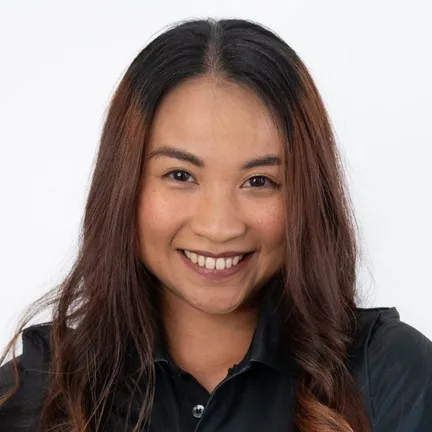
Meaw
Head Physiotherapist

Karim
Physiotherapist
Also on the team Sukanya, Physiotherapist
Next step
Find out where your shoulder stands
Message us on WhatsApp to book your free physio assessment. We check for warning signs, look at how your shoulder works and build your plan.
Opens WhatsApp with a message ready to send.
Questions first? WhatsApp +66 65 914 1604
Sources (12)
- Ibounig T, Järvinen TLN, Raatikainen S, et al. Incidental rotator cuff abnormalities on magnetic resonance imaging. JAMA Intern Med. 2026;186(4):406-414.
- Kanto K, Bäck M, Ibounig T, et al. Arthroscopic subacromial decompression versus placebo surgery for subacromial pain syndrome: 10 year follow-up of the FIMPACT randomised, placebo surgery controlled trial. BMJ. 2025;391:e086201.
- Hopewell S, Keene DJ, Marian IR, et al. Progressive exercise compared with best practice advice, with or without corticosteroid injection, for the treatment of patients with rotator cuff disorders (GRASP). Lancet. 2021;398(10298):416-428.
- Lambers Heerspink FO, Veen EJD, Dorrestijn O, et al. Update of guideline for diagnosis and treatment of subacromial pain syndrome, Part 1. Acta Orthop. 2026;97:91-98.
- Lazzarini SG, Bettariga F, Mosconi B, et al. Comparative effectiveness of physical therapy interventions in adults with rotator cuff tendinopathy: a systematic review and network meta-analysis. Br J Sports Med. 2026;60(13):970-982.
- Zhang B, Raguzzi IA, Dupuis F, et al. Addressing shoulder weakness in individuals with rotator cuff-related shoulder pain: a systematic review with meta-analysis. J Orthop Sports Phys Ther. 2026;56(2):67-84.
- Ingwersen KG, Jensen SL, Sørensen L, et al. Three months of progressive high-load versus traditional low-load strength training among patients with rotator cuff tendinopathy (RoCTEx). Orthop J Sports Med. 2017;5(8):2325967117723292.
- Haas R, Ibounig T, Buchbinder R. Management of shoulder pain in primary care: a review. JAMA Intern Med. 2026;186(10):1256-1268.
- Beard DJ, Rees JL, Cook JA, et al. Arthroscopic subacromial decompression for subacromial shoulder pain (CSAW): a multicentre, pragmatic, parallel group, placebo-controlled, three-group, randomised surgical trial. Lancet. 2018;391(10118):329-338.
- Versloot AHC, Schiphof D, Ottenheijm RPG, et al. Effectiveness of a corticosteroid injection versus exercise therapy for shoulder pain in general practice (SIX-Shoulder Study): a randomized controlled trial. Musculoskelet Sci Pract. 2026;82:103497.
- Lambers Heerspink FO, Veen EJD, Dorrestijn O, et al. Update of guideline for diagnosis and treatment of subacromial pain syndrome, Part 2. Acta Orthop. 2026;97:99-104.
- Cavaggion C, Luque-Suarez A, Voogt L, et al. Exercise into pain in chronic rotator cuff-related shoulder pain: a randomized controlled trial with 6-month follow-up. Open Access J Sports Med. 2024;15:181-196.
This page is general information based on the research listed here. It is not a diagnosis. Your physio will tailor the plan to you, and your surgeon’s or doctor’s instructions come first. Clinically reviewed by Meaw, Head Physiotherapist at Optimise, November 2026.